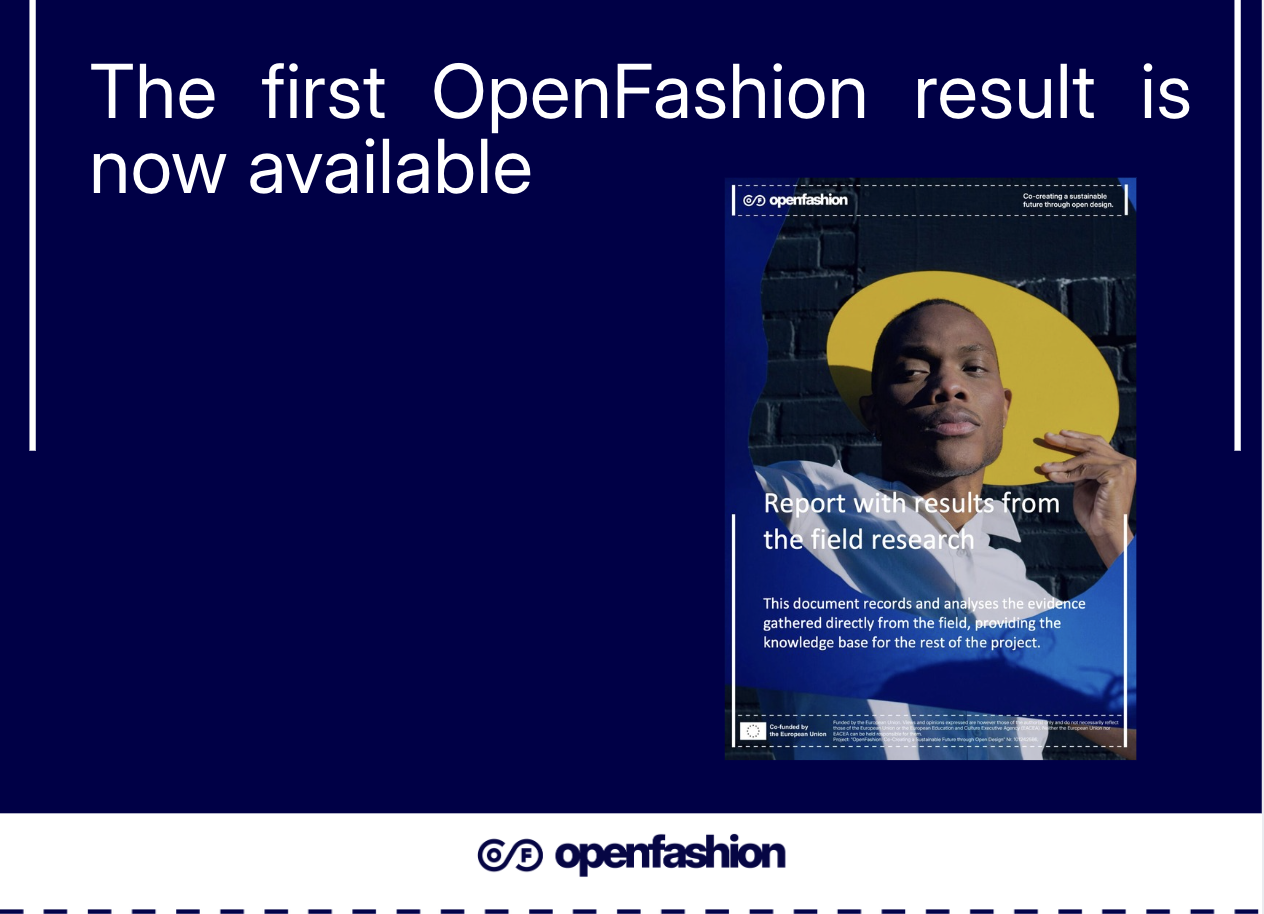
The Report with results from the field research represents an important first step in the OpenFashion journey, providing an evidence-based understanding of the skills, competences and capacity-building needs required to support the green and digital transition of the fashion and textile sector.
The research focused particularly on the VET/C-VET ecosystems in Morocco and Tunisia, combining quantitative and qualitative field research with an analysis of 32 best practices from Morocco, Tunisia, Italy, Spain and Greece. This broader perspective made it possible to connect local training needs with experiences, approaches and initiatives already being implemented across Europe and the South Mediterranean region.
What did the research explore?
The report investigated how VET/C-VET providers, trainers, enterprises and other relevant stakeholders can be better equipped to respond to the ongoing transformation of the fashion sector. The findings highlight the need for an increasingly integrated approach to skills development, bringing together areas that are often addressed separately: digital technologies, sustainable and circular production, business and entrepreneurial skills, open innovation, co-creation and stronger cooperation between education and industry. The research also underlines the importance of moving beyond theoretical knowledge. Practical, work-based and project-based learning, real-world challenges, interactive workshops and closer engagement with companies emerged as particularly relevant approaches for preparing learners and professionals for the changing needs of the sector.
From research to action
The report is not only a picture of the current situation. Its findings provide the evidence base for the next stages of OpenFashion. The results will contribute to the development of the OpenFashion Capacity Building Guidelines and will inform the project’s training methodology, learning activities and future resources, including the OpenFashion Toolkit for VET/C-VET trainers and the OpenFashion Online Learning Platform. Through this process, OpenFashion aims to support VET/C-VET organisations in developing the knowledge, tools and collaborative approaches needed to integrate open design, co-creation, sustainability and digital innovation into fashion education. The publication of the report therefore marks the transition from research to capacity building, turning the needs identified in the field into practical resources and learning opportunities for the OpenFashion community.
Discover the first OpenFashion result is now available in the Resources & Publications section of the OpenFashion website.