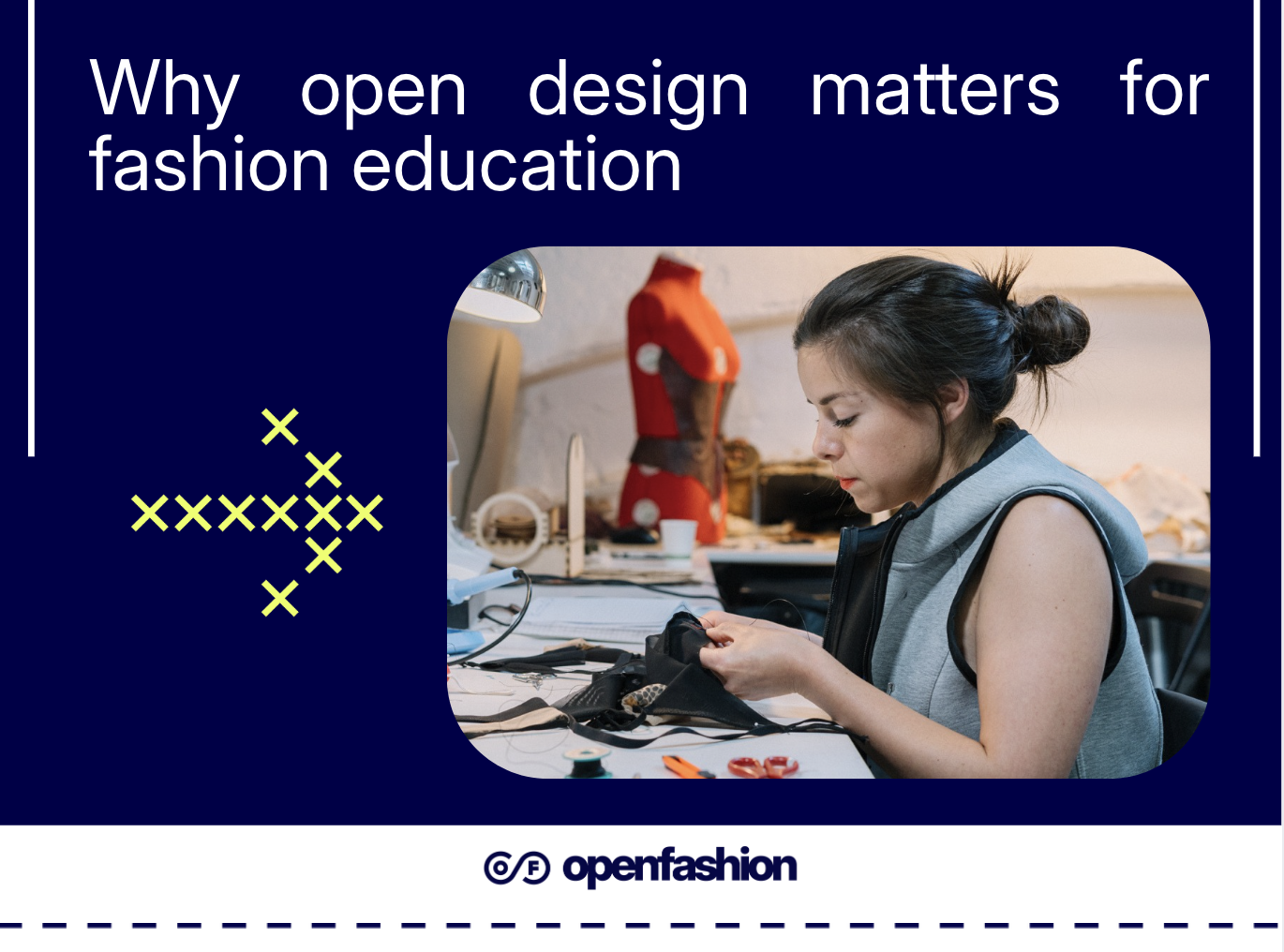
One of the five learning areas proposed by the OpenFashion partners is open business and open design. We asked Luciana Asinari, Educational Programs Lead at Fab Lab Barcelona (IAAC), what it means in practice.
1. Q: Open business and open design is one of the five learning areas proposed by the OpenFashion partners. What does open design mean in simple terms?
A: Open design in fashion is all about sharing ideas, tools, and knowledge instead of keeping designs and techniques behind closed doors. Within OpenFashion, we focus on making resources accessible, sharing know-how, and bringing people together to create better solutions. Designers, students, teachers, artisans, and fashion businesses can share digital patterns, techniques, and tools, learn from each other, and build on existing ideas. By combining this collaborative approach with technologies like 3D prototyping and digital design, they can test and improve garments before making them, saving materials and reducing waste. Ultimately, open design makes fashion more collaborative, accessible, and sustainable, while helping the sector adapt to the digital and green transition.
2. Q: Why does it matter for the fashion sector today?
A: The sector is under pressure to become more sustainable and digital, but established practices are hard to change. By sharing knowledge, tools, and techniques, open design makes innovation more accessible, especially for small businesses, independent designers, and vocational training centers that may not have the resources to develop everything from scratch. It also encourages collaboration between designers, manufacturers, educators, and local communities, helping them find creative solutions to common challenges. Moving away from closed, competitive models towards a more collaborative, resource-efficient, and forward-thinking industry is the first step to a healthier fashion industry.
Collaboration between European and North African partners is especially important for countries like Morocco and Tunisia, where the textile and fashion sectors play a significant role in the local economy and employment. By sharing digital tools, design methods, technical skills, and sustainable production techniques, open design helps local designers, manufacturers, artisans, and vocational training centers access new knowledge and adapt it to their own needs, as well as it creates opportunities to connect traditional textile craftsmanship with new technologies and models, helping local businesses become more innovative and competitive. The ultimate goal is to support the green and digital transition, and encourage the development of solutions rooted in local materials, skills, and cultural contexts.
3. Q: What does it change for vocational education and training (VET)?
A: Based on the field research in Deliverable D2.1, vocational education and training (VET/C-VET) needs to move beyond mostly theoretical lessons and work in isolation, towards a more hands-on, practical, and project-based approach that reflects the fashion sector’s digital and green transition. This means updating training in five key areas: digital fashion and virtual prototyping (CAD/CAM, 3D design, AI, and traceability), sustainable and circular fashion (eco-design, textile waste management, and cleaner production), business resilience, modern production techniques, and stronger links between training centres and industry. To make this happen, teachers need ongoing training, schools need better access to equipment and spaces for collaboration, and initiatives like OpenFashion Labs can give students and professionals the chance to learn by doing and tackle real-world challenges. Building long-term partnerships with companies, industry networks, and training providers is also key to keeping education relevant and helping learners develop the skills the sector needs.
4. Q: What can a digital fabrication lab like Fab Lab Barcelona contribute?
A: Through its historical involvement in the creation of the FabTextiles research line and its long experience in projects like SHeMakes and Transitions, Fab Lab Barcelona | IAAC has contributed to building knowledge in experimental open-source couture, bio-materials, e-textiles, wearable sensors, circular design, and 3D printing on fabrics. Furthermore, its physical infrastructure—including large-scale CNC milling, laser cutting, 6-axis industrial robotics, and electronics prototyping—provides the essential Industry 4.0 technology needed to bridge traditional textile crafts with advanced digital manufacturing. Beyond local prototyping, Fab Lab Barcelona scales social innovation globally through digital platforms and urban living lab testbeds.
We are leading Work Package 3 (WP3), turning the findings from the field research into practical learning activities to help vocational education and training (VET) move beyond traditional teaching methods and give teachers and learners the practical skills they need to work with digital fabrication and more sustainable ways of designing and producing fashion.
Fab Lab Barcelona | IAAC aims to connect OpenFashion to a wider community of designers, makers, educators, and innovators and the knowledge accumulated over 25 years of Fab Lab Network existence.